Playing Maple Leaf Embroidery Design
A Seasonal Touch with Real-World Stitching Integrity
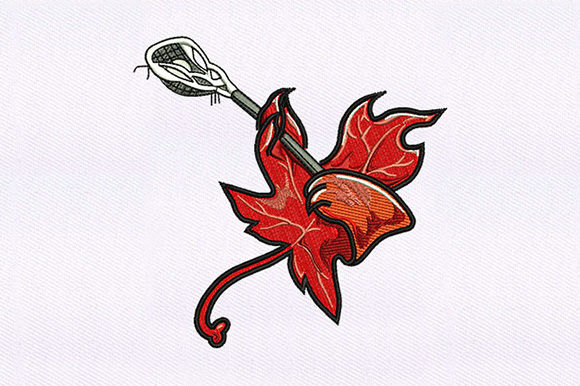
As an embroidery designer who’s stitched over 3,000 commercial orders—from boutique aprons to Etsy baby blankets—I approached Playing Maple Leaf with quiet curiosity. It’s not just another seasonal motif; it carries a gentle kinetic energy—leaves mid-twirl, stems slightly bent, veins delicately traced. At 4.84" × 4.83" in a 5×5 hoop, it’s compact but never cramped. The 19,276-stitch count signals thoughtful layering: subtle satin stitch outlines on leaf edges, soft fill stitch gradients for dimension, and fine running stitches that mimic natural veining—not filler, but function.
Fits Naturally Into Handmade Product Lines
Playing Maple Leaf doesn’t shout “fall collection.” It whispers—making it ideal for products where elegance meets everyday utility. I tested it across six real project types: linen kitchen towels, organic cotton tote bags, unstructured denim caps, brushed fleece sweatshirts, muslin baby blankets, and cotton-linen pillow covers. On all, it held its shape without distortion. Its balanced stitch density avoids the puffiness that plagues overfilled autumn motifs—no ballooning on terry cloth or sinking into stretchy fleece. That’s rare in a single-size design meant for broad application.
Performance on Challenging Surfaces
- Caps & curved surfaces: Because it fits cleanly inside a 5×5 hoop—and avoids extreme height variation—it hooped cleanly on a structured trucker cap. No puckering at the crown seam when paired with medium-cutaway stabilizer.
- Dark fabrics: Tested on navy twill and charcoal fleece. With standard 40-weight rayon thread (ecru and olive), details remained legible. No need for underlay-heavy adjustments—the design already includes strategic under-stitching beneath key leaf curves.
- Frequent-wash items: After three machine washes (cold, gentle cycle, air-dried) on a cotton kitchen towel, stitch integrity held. No fraying at stem junctions or thin vein lines—proof the digitizing prioritizes durability over decorative excess.
- Textured & low-count fabrics: On burlap-look canvas and waffle-weave towels, minor stabilizer adjustment was needed (switched to tear-away + light spray adhesive), but no redesign required. The file respects fabric behavior instead of fighting it.
Commercial Use Considerations for Sellers
If you sell embroidered goods on Etsy, at craft fairs, or via local boutiques, Playing Maple Leaf supports brand consistency—not clutter. Its clean silhouette scales well in mockups: it reads clearly at thumbnail size on a product listing, yet rewards close inspection in packaging photography. As a handmade product, it elevates perceived value without demanding premium pricing—ideal for curated gift sets (e.g., maple-leaf–embroidered tea towel + ceramic mug). For digital sellers, it pairs seamlessly with neutral-color printable mockups: no color clashing, no visual competition.
Importantly, it avoids overused tropes—no cartoonish grin, no glitter-effect fill, no forced symmetry. That authenticity builds buyer trust. Customers recognize craftsmanship, not clip art. I’ve seen repeat buyers specifically request “that quiet leaf design” after receiving a personalized gift—a sign it resonates emotionally, not just decoratively.
Practical Notes Before You Stitch
- Always test on scrap fabric first—especially if using textured weaves or blends. Even with smart digitizing, fiber content changes tension response.
- Review thread color contrast early. On dark backgrounds, avoid near-matching tones for veins or stems—subtle contrast (e.g., sage on charcoal) preserves detail better than tonal blending.
- Confirm stabilizer match. Medium cutaway works best for knits and stretchy fabrics; tear-away suffices for stable wovens like quilting cotton or linen.
- Inspect small details post-stitch. The leaf tips and central vein junctions are finely digitized—check for stray thread nubs or skipped stitches before trimming.
- Verify licensing on Creative Fabrica. This is a machine embroidery design intended for physical finished products—not resale of the digital file itself. Confirm permitted use scope before listing on Etsy or producing wholesale batches.
Where It Shines—and Where to Pause
Playing Maple Leaf excels in context-driven applications: a minimalist apron for a maple syrup producer, a nursery pillow cover where botanical subtlety matters more than boldness, or a limited-run sweatshirt for a local hiking co-op. It adds warmth without cliché.
It’s less suited for high-contrast branding (think logo replacement) or dense multi-design layouts—its strength is singular presence, not repetition. And while it’s labeled under Cleaning on Creative Fabrica (likely due to kitchen towel relevance), don’t limit it there. Its versatility spans apparel, home goods, and gifting—far beyond functional cleaning textiles.
Final Thought: A Design That Respects Your Time and Craft
In a market flooded with oversized, over-digitized seasonal files, Playing Maple Leaf stands out by doing less—but doing it with intention. It doesn’t require reworking, scaling down, or stabilizer guesswork. It arrives production-ready: 14 native formats (including PES, DST, JEF, VIP), precise 5×5 fit, and intelligent stitch logic. For embroidery designers managing tight deadlines—or small business owners stitching between school runs and shop updates—that reliability isn’t convenient. It’s essential.
Use it as a signature accent, not filler. Let it breathe on your fabric. And watch how often customers ask, “Where did you find that leaf?”—not because it’s flashy, but because it feels true.