Monotone Bee: A Craft Fair-Ready Embroidery Design
First Impression: Minimal, Modern, and Memorable
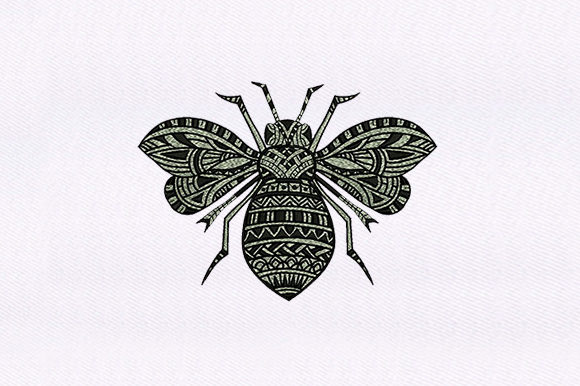
As an embroidery designer who’s prepped over 200 craft fair booths, my gut reaction to Monotone Bee is immediate: it’s clean, confident, and quietly clever. The name alone signals intention—not a cartoon bee, not a honeycomb overload, but a single, stylized bee rendered in one tone. That monotone approach lands as modern, minimalist, and just a touch botanical—perfect for makers who want handmade charm without clutter. It leans into the Mandala category not with radial symmetry, but with subtle balance: wings echo gentle curves, body lines suggest rhythm, and negative space breathes like intentional design—not afterthought.
Where Monotone Bee Shines on Craft Fair Products
This isn’t a design that shouts across a crowded aisle—it invites closer looking. And that’s exactly why it works so well on tactile, high-touch products:
- Tote bag design: Centered on a natural canvas or oat linen tote, Monotone Bee reads as elevated, not generic. At 4–5" wide, it holds presence without overwhelming.
- Apron embroidery: Placed just above the pocket or centered on the bib, it adds quiet personality—ideal for bakers, florists, and herbalists who value understated professionalism.
- Tea towel embroidery: On tightly woven cotton or linen tea towels, the design’s clean lines translate beautifully—even after repeated washing. Avoid heavy texture; smooth weaves preserve clarity.
- Embroidered patch: Sized down to 2", Monotone Bee becomes a versatile badge—sew-on or iron-on—for denim jackets, backpacks, or market bags. Its simplicity ensures legibility at small scale.
- Pillow cover & fabric pouch: Here, the design feels intentional and giftable. Paired with solid-color linen or cotton, it elevates a $28 pillow into a curated handmade product.
What Makes Monotone Bee Sell—Beyond Aesthetics
At the booth, customers don’t buy “a bee.” They buy feeling: calm focus, mindful craft, quiet confidence. Monotone Bee delivers that. It photographs exceptionally well for Etsy listings and social previews—no busy background needed, no color correction required. Its single-tone nature means fewer thread changes, faster hooping, and consistent results across batches. For the Etsy seller or small shop product line, that repeatability builds trust: customers order the same design on three different items and get cohesive, premium-looking results every time.
Careful-Use Notes: Protect Your Stitch Quality
Even elegant designs have limits—and Monotone Bee is no exception. As a working machine embroidery design, it demands attention to detail:
- Dense stitch areas: Wing contours and antennae may pack tight stitches. Always test on scrap fabric using your intended stabilizer—especially for textured towels or thick canvas.
- Small details: Those delicate wing veins won’t resolve on dark fabric or low-thread-count cotton. Stick to light-to-mid tone fabrics for best definition.
- Curved surfaces: Caps and curved market bags require precise hooping and possibly reduced density. Skip the crown placement—opt for the front panel instead.
- Size sensitivity: Below 2.5", the bee’s form risks blurring. Use it as a focal point—not a border motif—unless you’ve verified clarity at smaller scales.
Design Assets That Strengthen Your Booth & Brand
Monotone Bee isn’t just a digital embroidery file—it’s a brand asset. Its consistency across tote bags, aprons, and patches creates visual cohesion across your table display. Customers subconsciously register unity: “This maker has a point of view.” That perception lifts perceived value and encourages multi-item purchases. When paired with neutral packaging and simple typography in your printable mockup, it reinforces handmade quality—not hobbyist effort. For boutique makers building a signature style, Monotone Bee fits seamlessly into a refined, repeatable aesthetic—no seasonal rebranding needed.
Practical Embroidery Designer Notes Before You Stitch
Before cutting fabric or loading hoops, do these five things:
- Test the design on scrap fabric matching your final product—same weave, weight, and dye lot if possible.
- Check thread contrast against your base fabric. Even “monotone” needs enough tonal separation to read clearly.
- Review spacing and stitch density in your embroidery software—look for overlapping jump stitches or under-digitized fills.
- Confirm hoop size compatibility with your machine and project type. Some versions may require larger hoops for optimal tension.
- Verify commercial licensing before selling finished products. This embroidery file includes multiple formats (10O, ART, CND, DSB, DST, DSZ, EXP, HUS, JEF, PCS, PEC, PES, TAP, VIP, VP3, XXX), but always cross-check license terms with the source.
And one non-negotiable: create at least one real mockup—not digital, not printed, but stitched, pressed, and displayed. Hold it in natural light. Pin it to your booth backdrop. See how it holds up next to your other craft fair product samples. That physical reality check separates good design from great selling.
Final Thought: Monotone Bee Is Quiet Confidence, Stitched
In a sea of loud fonts, glittery bees, and over-digitized florals, Monotone Bee stands out by stepping back. It doesn’t chase trends—it supports them. It gives your handmade product dignity, your commercial embroidery polish, and your booth a signature note that feels intentional, not incidental. Whether you’re stitching for Etsy, local markets, or wholesale boutiques, this embroidery design earns its place—not because it’s flashy, but because it’s finished, thoughtful, and ready to represent your craft with quiet strength.