Welcome Winter
First Impressions: A Hand-Lettered Whisper of the Season
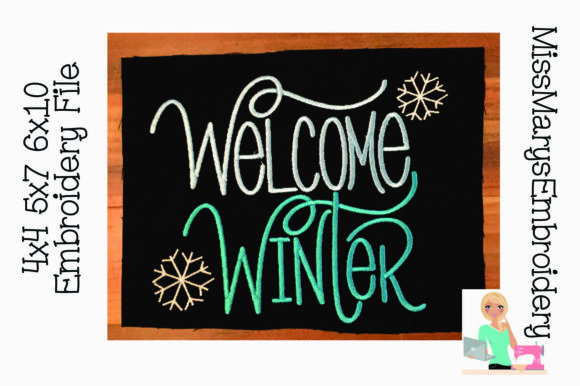
Opening Welcome Winter feels like unrolling a hand-stitched holiday card—warm, intentional, and quietly confident. This isn’t a stocky, over-digitized winter motif with snowflakes and icicles. It’s a hand-lettered phrase, softly curved and thoughtfully spaced, radiating gentle seasonal charm without leaning into cliché. The digitization breathes—there’s air between letters, subtle weight variation in the strokes, and a slight organic wobble that says “handmade,” not “machine-perfect.” It lands as elegant *and* approachable: romantic enough for a wedding keepsake, sweet enough for a newborn’s blanket, classic enough to hang in a farmhouse kitchen year after year.
Where Welcome Winter Shines as a Personalized Gift
This embroidery file isn’t just seasonal—it’s emotionally versatile. As an embroidery designer testing it for my own small shop, I immediately saw how it bridges multiple customer moments:
- Baby embroidery: Stitched onto a cream cotton muslin swaddle or a gauzy receiving blanket, Welcome Winter becomes a tender, gender-neutral welcome—not just to the season, but to life itself. Paired with a single embroidered snowflake or tiny knit hat motif (added separately), it reads as heirloom-quality.
- Wedding gift: On ivory linen pillow covers or monogrammed guest towels, it offers quiet sophistication. Imagine it stitched beside a couple’s initials and wedding date—timeless, warm, and deeply personal.
- Nursery decor & family keepsakes: Think framed hoop art on a nursery wall, or embroidered onto a wool-blend baby blanket. Its soft lettering avoids visual clutter, letting the sentiment—and the craftsmanship—take center stage.
- Everyday handmade products: A linen apron for a baker, a canvas tote for a teacher, or a heavyweight tea towel for a cozy café—all gain instant character and intentionality when Welcome Winter is placed thoughtfully near a corner or along a hem.
Smart Placement Matters: Know Your Fabric & Function
While Welcome Winter is beautifully digitized, its hand-lettered delicacy means context is key. Here’s where thoughtful planning pays off:
- Avoid tight curves or stretchy knits: The letterforms rely on clean line integrity. Stretchy baby onesies or curved mug sleeves risk distortion—stick to stable weaves like quilting cotton, linen, terry cloth, or medium-weight canvas.
- Texture requires caution: On heavily textured terrycloth or bouclé blankets, fine letter details may soften. Consider slightly enlarging the design or using a tear-away + cut-away stabilizer combo for crispness.
- Dark fabric? Test contrast early: The design’s charm lies in its subtlety—but on charcoal or navy, light thread can disappear. Run a printable mockup first, then stitch a test on black fabric with your chosen thread colors to verify legibility.
- Frequent washing? Reinforce stability: For embroidered towels or baby blankets, use high-quality polyester thread and a lightweight cut-away stabilizer. Avoid overly dense fill areas—Welcome Winter’s open lettering helps here, but always check stitch density in your embroidery software before stitching.
Why This Design Builds Trust—and Sales
In a crowded digital marketplace, Welcome Winter stands out because it feels *authentic*, not algorithmic. Etsy sellers and small shop owners know: customers scroll past generic snowflakes but pause for something that whispers story. That emotional resonance translates directly to perceived value. When a buyer sees this stitched cleanly on a linen pillow cover in your product photo, they don’t just see decoration—they see care, curation, and craftsmanship. That builds trust faster than any listing description.
It also elevates your photography. The balanced negative space in the lettering gives your camera room to breathe—no busy background competition. Pair it with natural light, a rustic wood surface, and a sprig of dried eucalyptus, and you’ve got scroll-stopping content that converts.
Practical Embroidery Notes Before You Stitch
Before committing to a customer order—or uploading to your Etsy shop—run these checks:
- Test on scrap fabric identical to your final product (e.g., terry cloth for towels, cotton sateen for pillow covers).
- Confirm hoop size compatibility. While not specified, hand-lettered designs like this often fit comfortably in 4x4" or 5x7" hoops—verify before hooping your good fabric.
- Review thread color contrast on both light and dark fabric swatches. Soft neutrals (oatmeal, heather gray, sage) often complement the design’s mood best.
- Use appropriate stabilizer: Tear-away for stable wovens; cut-away for knits or high-wash items; a light iron-on for delicate linens.
- Check small details post-stitch: Look closely at serifs or thin connecting strokes—do they hold up? Adjust tension or stabilizer if needed.
- Verify commercial licensing. Since this is marketed as a digital embroidery file for personalized gift products, confirm whether your intended use (e.g., selling finished embroidered towels on Etsy) falls within the license terms. When in doubt, contact the designer.
A Thoughtful Tool for Meaningful Making
Welcome Winter isn’t just another winter-themed machine embroidery design—it’s a quiet invitation to slow down, personalize with purpose, and connect through craft. Whether you’re stitching baby embroidery for a friend’s new arrival, curating wedding gifts for a boutique, or building a cohesive line of small shop products for the holidays, this file delivers elegance without excess. Its strength lies in restraint: no glitter, no gimmicks—just hand-drawn warmth, expert digitization, and the kind of quiet confidence that makes customers feel seen.
For Etsy sellers and handmade creators, it’s more than a download—it’s a ready-made moment of meaning. Use it well, test intentionally, and let Welcome Winter do what it does best: welcome people home.